アプリ内メッセージをカスタマイズする
Braze SDKのアプリ内メッセージをカスタマイズする方法を説明します。高度なスタイル設定については、キーと値のペアを使ってメッセージのスタイルをカスタマイズするチュートリアルを参照してください。
前提条件
この機能を使用する前に、Web Braze SDKを統合する必要がある。
カスタムスタイル
BrazeのUI要素はデフォルトの外観と操作感を備えており、ニュートラルなアプリ内メッセージ体験を提供し、他のBrazeモバイルプラットフォームとの一貫性を目指しています。デフォルトのBrazeスタイルは、Braze SDK内のCSSで定義されています。
デフォルトスタイルの設定
アプリケーションで選択したスタイルを上書きすることで、独自の背景画像、フォントファミリ、スタイル、サイズ、アニメーションなどを使用して標準アプリ内メッセージタイプをカスタマイズできます。
たとえば、次の例はアプリ内メッセージのヘッダーをイタリックで表示する上書きを示しています。
body .ab-in-app-message .ab-message-header {
font-style: italic;
}
詳細についてはJSDocsを参照してください。
z-indexをカスタマイズする
デフォルトでは、アプリ内メッセージは z-index: 9001 を使用して表示されます。Webサイトがそれよりも高い値で要素をスタイルしているシナリオでは、inAppMessageZIndex 初期化オプションを使用して設定できます。
braze.initialize("YOUR-API-KEY", {
    baseUrl: "YOUR-API-ENDPOINT",
    inAppMessageZIndex: 12000
});

この機能は、Web Braze SDK v3.3.0以降でのみ使用できます。
メッセージの閉じ方をカスタマイズする
デフォルトでは、アプリ内メッセージが表示されているときにエスケープキーを押すか、ページのグレーアウトした背景をクリックすると、メッセージが閉じられます。requireExplicitInAppMessageDismissal 初期化オプションをtrueに設定すると、この動作を無効にし、メッセージを閉じるために明示的なボタンクリックを必要とするようにできます。
import * as braze from "@braze/web-sdk";
braze.initialize("YOUR-API-KEY", {
    baseUrl: "YOUR-API-ENDPOINT",
    requireExplicitInAppMessageDismissal: true
});
表示タイミングをカスタマイズする
デフォルトの表示タイミングを上書きするには、braze.automaticallyShowInAppMessages() の呼び出しを削除し、braze.subscribeToInAppMessage() でメッセージを処理します。braze.openSession() の前にコールバックを登録することで、セッション開始メッセージをインターセプトし、各メッセージを表示するか延期するかを決定できます。
デフォルトでは、Brazeはアプリ内メッセージがトリガーされ、表示対象となったときに表示します。アプリ体験に異なる動作が必要な場合は、カスタムコールバックを使用して、独自のロジックに基づいてメッセージを延期または表示できます。
次の例は、トリガーされたアプリ内メッセージをサブスクライブし、選択したメッセージを延期し、延期したメッセージを後で表示する方法を示しています。
import * as braze from "@braze/web-sdk";

braze.initialize("YOUR-API-KEY", {
    baseUrl: "YOUR-API-ENDPOINT"
});

braze.subscribeToInAppMessage(function (message) {
    // Control-group messages should always be "shown" to log analytics.
    if (message.isControl || message instanceof braze.ControlMessage) {
        braze.showInAppMessage(message);
        return;
    }

    const shouldDefer = true; // Replace with your own display logic

    if (shouldDefer) {
        braze.deferInAppMessage(message);
        return;
    }

    braze.showInAppMessage(message);
});

braze.openSession();

// Later, when your app is ready to display a deferred message:
const deferredMessage = braze.getDeferredInAppMessage();
if (deferredMessage) {
    braze.showInAppMessage(deferredMessage);
}
関連する配信カスタマイズのガイダンスについては、以下を参照してください。
リンクを新しいタブで開く
アプリ内メッセージのリンクを新しいタブで開くように設定するには、openInAppMessagesInNewTab オプションを true に設定して、アプリ内メッセージのクリックによるすべてのリンクが新しいタブまたはウィンドウで開くようにします。
braze.initialize('api-key', { openInAppMessagesInNewTab: true} );
前提条件
この機能を使用する前に、Android Braze SDKを統合する必要がある。 アプリ内メッセージの設定も必要です。
カスタムマネージャーリスナーの設定
BrazeInAppMessageManagerリスナーはアプリ内メッセージの表示とライフサイクルを自動的に処理できますが、メッセージを完全にカスタマイズしたい場合はカスタムマネージャーリスナーを実装する必要があります。
Braze SDKにはデフォルトのDefaultHtmlInAppMessageActionListenerクラスがあり、カスタムリスナーが定義されていない場合に使用され、適切なアクションを自動的に実行します。ユーザーがカスタムHTMLアプリ内メッセージ内のさまざまなボタンを操作する方法をより詳細に制御する必要がある場合は、カスタムIHtmlInAppMessageActionListenerクラスを実装します。
このリスナーは、カスタムHTMLで作成されたメッセージとドラッグ&ドロップ(DnD)エディターで作成されたメッセージの__両方__に適用されます。従来のIAMには適用されません。従来のIAMとは、Brazeに組み込まれたSDKレンダリングのメッセージタイプ(スライドアップ、モーダル、フルなど)で、元のアプリ内メッセージ作成画面で定義済みのレイアウトを使用して作成されたものです。カスタムHTMLやDnD IAMとは異なり、HTMLアクションリスナーのフローを通過しません。
カスタムIHtmlInAppMessageActionListenerを設定すると、そのロジックが_すべての_DnDメッセージのデフォルトのクリック動作をオーバーライドします。マーケティングチームのキャンペーンに予期しない影響を与える可能性があるため、この点をチームに周知してください。
ステップ1: カスタムマネージャーリスナーを実装する
ステップ1.1: IInAppMessageManagerListenerを実装する
IInAppMessageManagerListenerを実装するクラスを作成します。
IInAppMessageManagerListener内のコールバックは、アプリ内メッセージのライフサイクルのさまざまな段階でも呼び出されます。例えば、Brazeからアプリ内メッセージを受信した際にカスタムマネージャーリスナーを設定すると、beforeInAppMessageDisplayed()メソッドが呼び出されます。このメソッドの実装がInAppMessageOperation.DISCARDを返す場合、アプリ内メッセージがホストアプリによって処理され、Brazeによって表示されるべきではないことをBrazeに通知します。InAppMessageOperation.DISPLAY_NOWが返された場合、Brazeはアプリ内メッセージの表示を試みます。このメソッドは、アプリ内メッセージをカスタマイズされた方法で表示する場合に使用します。
IInAppMessageManagerListenerには、メッセージやボタンのクリックに対するデリゲートメソッドも含まれています。これは、ボタンやメッセージがクリックされた際にメッセージをインターセプトして追加処理を行う場合などに利用できます。
ステップ1.2: IAMビューのライフサイクルメソッドにフックする(オプション)
IInAppMessageManagerListenerインターフェイスには、アプリ内メッセージビューのライフサイクルの異なるポイントで呼び出されるアプリ内メッセージビューメソッドがあります。これらのメソッドは次の順序で呼び出されます。
beforeInAppMessageViewOpened: アプリ内メッセージがアクティビティのビューに追加される直前に呼び出されます。この時点ではまだアプリ内メッセージはユーザーに表示されていません。afterInAppMessageViewOpened: アプリ内メッセージがアクティビティのビューに追加された直後に呼び出されます。この時点で、アプリ内メッセージがユーザーに表示されます。beforeInAppMessageViewClosed: アプリ内メッセージがアクティビティのビューから削除される直前に呼び出されます。この時点でも、アプリ内メッセージはユーザーに表示されています。afterInAppMessageViewClosed: アプリ内メッセージがアクティビティのビューから削除された直後に呼び出されます。この時点では、アプリ内メッセージはユーザーに表示されなくなります。
afterInAppMessageViewOpenedとbeforeInAppMessageViewClosedの間の時間が、アプリ内メッセージビューが画面上に表示され、ユーザーに見える状態にある期間です。

これらのメソッドの実装は必須ではありません。アプリ内メッセージビューのライフサイクルをトラッキングし、通知するためにのみ提供されています。これらのメソッドの実装は空のままにしておいても構いません。
IHtmlInAppMessageActionListenerを実装するクラスを作成します。
IHtmlInAppMessageActionListener内のコールバックは、ユーザーがHTMLアプリ内メッセージ内で以下のアクションを開始するたびに呼び出されます。
- 閉じるボタンをクリックする
- カスタムイベントを発火する
- HTMLアプリ内メッセージ内のURLをクリックする
public class CustomHtmlInAppMessageActionListener implements IHtmlInAppMessageActionListener {
private final Context mContext;
public CustomHtmlInAppMessageActionListener(Context context) {
mContext = context;
}
@Override
public void onCloseClicked(IInAppMessage inAppMessage, String url, Bundle queryBundle) {
Toast.makeText(mContext, "HTML In App Message closed", Toast.LENGTH_LONG).show();
BrazeInAppMessageManager.getInstance().hideCurrentlyDisplayingInAppMessage(false);
}
@Override
public boolean onCustomEventFired(IInAppMessage inAppMessage, String url, Bundle queryBundle) {
Toast.makeText(mContext, "Custom event fired. Ignoring.", Toast.LENGTH_LONG).show();
return true;
}
@Override
public boolean onOtherUrlAction(IInAppMessage inAppMessage, String url, Bundle queryBundle) {
Toast.makeText(mContext, "Custom url pressed: " + url + " . Ignoring", Toast.LENGTH_LONG).show();
BrazeInAppMessageManager.getInstance().hideCurrentlyDisplayingInAppMessage(false);
return true;
}
}
class CustomHtmlInAppMessageActionListener(private val mContext: Context) : IHtmlInAppMessageActionListener {

    override fun onCloseClicked(inAppMessage: IInAppMessage, url: String, queryBundle: Bundle) {
        Toast.makeText(mContext, "HTML In App Message closed", Toast.LENGTH_LONG).show()
        BrazeInAppMessageManager.getInstance().hideCurrentlyDisplayingInAppMessage(false)
    }

    override fun onCustomEventFired(inAppMessage: IInAppMessage, url: String, queryBundle: Bundle): Boolean {
        Toast.makeText(mContext, "Custom event fired. Ignoring.", Toast.LENGTH_LONG).show()
        return true
    }

    override fun onOtherUrlAction(inAppMessage: IInAppMessage, url: String, queryBundle: Bundle): Boolean {
        Toast.makeText(mContext, "Custom url pressed: $url . Ignoring", Toast.LENGTH_LONG).show()
        BrazeInAppMessageManager.getInstance().hideCurrentlyDisplayingInAppMessage(false)
        return true
    }
}
ステップ2: Brazeにカスタムマネージャーリスナーを使用するよう指示する
IInAppMessageManagerListenerを作成したら、BrazeInAppMessageManager.getInstance().setCustomInAppMessageManagerListener()を呼び出して、BrazeInAppMessageManagerにデフォルトのリスナーの代わりにカスタムのIInAppMessageManagerListenerを使用するよう指示します。他のBraze呼び出しの前にApplication.onCreate()でこれを実行してください。そうすることで、アプリ内メッセージが表示される前にカスタムリスナーが設定されます。
表示前のアプリ内メッセージの変更
新しいアプリ内メッセージを受信し、すでに表示されているアプリ内メッセージがある場合、新しいメッセージはスタックの一番上に置かれ、後で表示できます。
ただし、アプリ内メッセージが表示されていない場合は、IInAppMessageManagerListenerの以下のデリゲートメソッドが呼び出されます。
@Override
public InAppMessageOperation beforeInAppMessageDisplayed(IInAppMessage inAppMessage) {
  return InAppMessageOperation.DISPLAY_NOW;
}
override fun beforeInAppMessageDisplayed(inAppMessage: IInAppMessage): InAppMessageOperation {
  return InAppMessageOperation.DISPLAY_NOW
}
InAppMessageOperation()の戻り値により、メッセージを表示するタイミングを制御できます。このメソッドの推奨される使い方は、アプリ内メッセージがユーザーのアプリ体験を妨げる場合にDISPLAY_LATERを返すことで、アプリの特定の部分でメッセージの表示を遅延させることです。
InAppMessageOperation戻り値 |
動作 |
|---|---|
DISPLAY_NOW |
メッセージが表示されます |
DISPLAY_LATER |
メッセージはスタックに返され、次に利用可能な機会に表示されます |
DISCARD |
メッセージは破棄されます |
null |
メッセージは無視されます。このメソッドはnullを返すべきではありません |
詳細については、InAppMessageOperationを参照してください。

アプリ内メッセージをDISCARDし、独自のアプリ内メッセージビューに置き換える場合は、アプリ内メッセージのクリック数とインプレッション数を手動で記録する必要があります。
Androidでは、アプリ内メッセージでlogClickとlogImpressionを呼び出し、没入型のアプリ内メッセージではlogButtonClickを呼び出すことで行います。
アプリ内メッセージがスタックに置かれたら、BrazeInAppMessageManager.getInstance().requestDisplayInAppMessage()を呼び出すことでいつでもそのメッセージの取得と表示をリクエストできます。このメソッドは、Brazeに対しスタックから次に利用可能なアプリ内メッセージを表示するようリクエストします。
IHtmlInAppMessageActionListenerを作成したら、BrazeInAppMessageManager.getInstance().setCustomHtmlInAppMessageActionListener()を呼び出して、BrazeInAppMessageManagerにデフォルトのアクションリスナーの代わりにカスタムのIHtmlInAppMessageActionListenerを使用するよう指示します。
Brazeへの他の呼び出しの前に、Application.onCreate()でIHtmlInAppMessageActionListenerを設定することをお勧めします。これにより、アプリ内メッセージが表示される前にカスタムアクションリスナーが設定されます。
BrazeInAppMessageManager.getInstance().setCustomHtmlInAppMessageActionListener(new CustomHtmlInAppMessageActionListener(context));
BrazeInAppMessageManager.getInstance().setCustomHtmlInAppMessageActionListener(CustomHtmlInAppMessageActionListener(context))
カスタムファクトリの設定
カスタムファクトリオブジェクトを通じて、いくつかのデフォルト設定をオーバーライドできます。これらは必要に応じてBraze SDKに登録して、目的の結果を得ることができます。ただし、ファクトリをオーバーライドする場合、明示的にデフォルトに委ねるか、Brazeのデフォルトが提供する機能を再実装する必要があります。次のコードスニペットは、IInAppMessageViewFactoryおよびIInAppMessageViewWrapperFactoryインターフェイスのカスタム実装を提供する方法を示しています。
アプリ内メッセージの種類
class BrazeDemoApplication : Application(){
 override fun onCreate() {
    super.onCreate()
    registerActivityLifecycleCallbacks(BrazeActivityLifecycleCallbackListener(true, true))
    BrazeInAppMessageManager.getInstance().setCustomInAppMessageViewWrapperFactory(CustomInAppMessageViewWrapperFactory())
    BrazeInAppMessageManager.getInstance().setCustomInAppMessageViewFactory(CustomInAppMessageViewFactory())
  }
}
アプリ内メッセージの種類
public class BrazeDemoApplication extends Application {
  @Override
  public void onCreate{
    super.onCreate();
    registerActivityLifecycleCallbacks(new BrazeActivityLifecycleCallbackListener(true, true));
    BrazeInAppMessageManager.getInstance().setCustomInAppMessageViewWrapperFactory(new CustomInAppMessageViewWrapperFactory());
    BrazeInAppMessageManager.getInstance().setCustomInAppMessageViewFactory(new CustomInAppMessageViewFactory());
  }
}
Brazeのアプリ内メッセージタイプには、ほとんどのカスタムユースケースをカバーする汎用性があります。しかし、デフォルトのタイプを使用する代わりにアプリ内メッセージの視覚的な外観を完全に定義したい場合、Brazeではカスタムビューファクトリを設定することでそれが可能です。
BrazeInAppMessageManagerは、デフォルトでDefaultInAppMessageViewWrapperを使用して、既存のアクティビティビュー階層へのアプリ内メッセージモデルの配置を自動的に処理します。アプリ内メッセージをビュー階層に配置する方法をカスタマイズする必要がある場合は、カスタムのIInAppMessageViewWrapperFactoryを使用する必要があります。
アプリ内メッセージにはアニメーションの動作がプリセットされています。Slideupメッセージは画面にスライドし、fullやmodalメッセージはフェードインおよびフェードアウトします。アプリ内メッセージにカスタムアニメーションの動作を定義したい場合、Brazeではカスタムアニメーションファクトリを設定することでそれが可能です。
ステップ1: ファクトリを実装する
IInAppMessageViewFactoryを実装するクラスを作成します。
public class CustomInAppMessageViewFactory implements IInAppMessageViewFactory {
  @Override
  public View createInAppMessageView(Activity activity, IInAppMessage inAppMessage) {
    // Uses a custom view for slideups, modals, and full in-app messages.
    // HTML in-app messages and any other types will use the Braze default in-app message view factories
    switch (inAppMessage.getMessageType()) {
      case SLIDEUP:
      case MODAL:
      case FULL:
        // Use a custom view of your choosing
        return createMyCustomInAppMessageView();
      default:
        // Use the default in-app message factories
        final IInAppMessageViewFactory defaultInAppMessageViewFactory = BrazeInAppMessageManager.getInstance().getDefaultInAppMessageViewFactory(inAppMessage);
        return defaultInAppMessageViewFactory.createInAppMessageView(activity, inAppMessage);
    }
  }
}
class CustomInAppMessageViewFactory : IInAppMessageViewFactory {
  override fun createInAppMessageView(activity: Activity, inAppMessage: IInAppMessage): View {
    // Uses a custom view for slideups, modals, and full in-app messages.
    // HTML in-app messages and any other types will use the Braze default in-app message view factories
    when (inAppMessage.messageType) {
      MessageType.SLIDEUP, MessageType.MODAL, MessageType.FULL ->
        // Use a custom view of your choosing
        return createMyCustomInAppMessageView()
      else -> {
        // Use the default in-app message factories
        val defaultInAppMessageViewFactory = BrazeInAppMessageManager.getInstance().getDefaultInAppMessageViewFactory(inAppMessage)
        return defaultInAppMessageViewFactory!!.createInAppMessageView(activity, inAppMessage)
      }
    }
  }
}
IInAppMessageViewWrapperFactoryを実装し、IInAppMessageViewWrapperを返すクラスを作成します。
このファクトリは、アプリ内メッセージビューが作成された直後に呼び出されます。カスタムのIInAppMessageViewWrapperを実装する最も簡単な方法は、デフォルトのDefaultInAppMessageViewWrapperを拡張することです。
public class CustomInAppMessageViewWrapper extends DefaultInAppMessageViewWrapper {
  public CustomInAppMessageViewWrapper(View inAppMessageView,
                                       IInAppMessage inAppMessage,
                                       IInAppMessageViewLifecycleListener inAppMessageViewLifecycleListener,
                                       BrazeConfigurationProvider brazeConfigurationProvider,
                                       Animation openingAnimation,
                                       Animation closingAnimation, View clickableInAppMessageView) {
    super(inAppMessageView,
        inAppMessage,
        inAppMessageViewLifecycleListener,
        brazeConfigurationProvider,
        openingAnimation,
        closingAnimation,
        clickableInAppMessageView);
  }

  @Override
  public void open(@NonNull Activity activity) {
    super.open(activity);
    Toast.makeText(activity.getApplicationContext(), "Opened in-app message", Toast.LENGTH_SHORT).show();
  }

  @Override
  public void close() {
    super.close();
    Toast.makeText(mInAppMessageView.getContext().getApplicationContext(), "Closed in-app message", Toast.LENGTH_SHORT).show();
  }
}
class CustomInAppMessageViewWrapper(inAppMessageView: View,
                                    inAppMessage: IInAppMessage,
                                    inAppMessageViewLifecycleListener: IInAppMessageViewLifecycleListener,
                                    brazeConfigurationProvider: BrazeConfigurationProvider,
                                    openingAnimation: Animation,
                                    closingAnimation: Animation, clickableInAppMessageView: View) :
    DefaultInAppMessageViewWrapper(inAppMessageView,
        inAppMessage,
        inAppMessageViewLifecycleListener,
        brazeConfigurationProvider,
        openingAnimation,
        closingAnimation,
        clickableInAppMessageView) {

  override fun open(activity: Activity) {
    super.open(activity)
    Toast.makeText(activity.applicationContext, "Opened in-app message", Toast.LENGTH_SHORT).show()
  }

  override fun close() {
    super.close()
    Toast.makeText(mInAppMessageView.context.applicationContext, "Closed in-app message", Toast.LENGTH_SHORT).show()
  }
}
IInAppMessageAnimationFactoryを実装するクラスを作成します。
public class CustomInAppMessageAnimationFactory implements IInAppMessageAnimationFactory {

  @Override
  public Animation getOpeningAnimation(IInAppMessage inAppMessage) {
    Animation animation = new AlphaAnimation(0, 1);
    animation.setInterpolator(new AccelerateInterpolator());
    animation.setDuration(2000L);
    return animation;
  }

  @Override
  public Animation getClosingAnimation(IInAppMessage inAppMessage) {
    Animation animation = new AlphaAnimation(1, 0);
    animation.setInterpolator(new DecelerateInterpolator());
    animation.setDuration(2000L);
    return animation;
  }
}
class CustomInAppMessageAnimationFactory : IInAppMessageAnimationFactory {
  override fun getOpeningAnimation(inAppMessage: IInAppMessage): Animation {
    val animation: Animation = AlphaAnimation(0, 1)
    animation.interpolator = AccelerateInterpolator()
    animation.duration = 2000L
    return animation
  }

  override fun getClosingAnimation(inAppMessage: IInAppMessage): Animation {
    val animation: Animation = AlphaAnimation(1, 0)
    animation.interpolator = DecelerateInterpolator()
    animation.duration = 2000L
    return animation
  }
}
ステップ2: Brazeにファクトリを使用するよう指示する
IInAppMessageViewFactoryを作成したら、BrazeInAppMessageManager.getInstance().setCustomInAppMessageViewFactory()を呼び出して、BrazeInAppMessageManagerにデフォルトのビューファクトリの代わりにカスタムのIInAppMessageViewFactoryを使用するよう指示します。
Brazeへの他の呼び出しの前に、Application.onCreate()でIInAppMessageViewFactoryを設定することをお勧めします。これにより、アプリ内メッセージが表示される前にカスタムビューファクトリが設定されます。
仕組み
slideupのアプリ内メッセージビューはIInAppMessageViewを実装しています。fullおよびmodalタイプのメッセージビューはIInAppMessageImmersiveViewを実装しています。これらのクラスのいずれかを実装することで、Brazeは必要に応じてクリックリスナーをカスタムビューに追加できます。すべてのBrazeビュークラスはAndroidのViewクラスを拡張しています。
IInAppMessageViewを実装すると、カスタムビューの特定の部分をクリック可能として定義できます。IInAppMessageImmersiveViewを実装すると、メッセージボタンビューと閉じるボタンビューを定義できます。
IInAppMessageViewWrapperを作成したら、BrazeInAppMessageManager.getInstance().setCustomInAppMessageViewWrapperFactory()を呼び出して、BrazeInAppMessageManagerにデフォルトのビューラッパーファクトリの代わりにカスタムのIInAppMessageViewWrapperFactoryを使用するよう指示します。
Brazeへの他の呼び出しの前に、Application.onCreate()でIInAppMessageViewWrapperFactoryを設定することをお勧めします。これにより、アプリ内メッセージが表示される前にカスタムビューラッパーファクトリが設定されます。
BrazeInAppMessageManager.getInstance().setCustomInAppMessageViewWrapperFactory(new CustomInAppMessageViewWrapper());
BrazeInAppMessageManager.getInstance().setCustomInAppMessageViewWrapperFactory(CustomInAppMessageViewWrapper())
IInAppMessageAnimationFactoryを作成したら、BrazeInAppMessageManager.getInstance().setCustomInAppMessageAnimationFactory()を呼び出して、BrazeInAppMessageManagerにデフォルトのアニメーションファクトリの代わりにカスタムのIInAppMessageAnimationFactoryを使用するよう指示します。
Brazeへの他の呼び出しの前に、Application.onCreate()でIInAppMessageAnimationFactoryを設定することをお勧めします。これにより、アプリ内メッセージが表示される前にカスタムアニメーションファクトリが設定されます。
カスタムスタイル
BrazeのUI要素は、Android標準のUIガイドラインにマッチしたデフォルトのルックアンドフィールで提供され、シームレスな体験を提供します。このリファレンス記事では、AndroidまたはFireOSアプリケーションのアプリ内メッセージングのカスタムスタイリングについて説明します。
デフォルトスタイルの設定
デフォルトのスタイルは、Braze SDKのstyles.xmlファイルで確認できます。
  <style name="Braze"/>
  <style name="Braze.InAppMessage"/>
  <style name="Braze.InAppMessage.Header">
    <item name="android:layout_height">wrap_content</item>
    <item name="android:layout_width">match_parent</item>
    <item name="android:padding">0.0dp</item>
    <item name="android:background">@android:color/transparent</item>
    <item name="android:textColor">@color/com_braze_inappmessage_header_text</item>
    <item name="android:textSize">20.0sp</item>
    <item name="android:lineSpacingMultiplier">1.3</item>
    <item name="android:gravity">center</item>
    <item name="android:textStyle">bold</item>
    <item name="android:layout_centerHorizontal">true</item>
  </style>
必要に応じて、これらのスタイルをオーバーライドし、アプリにより適したルックアンドフィールを作成できます。
スタイルをオーバーライドするには、スタイル全体をプロジェクトのstyles.xmlファイルにコピーし、変更を加えます。すべての属性が正しく設定されるようにするには、スタイル全体をローカルのstyles.xmlにコピーする必要があります。これらのカスタムスタイルは、個々のUI要素を変更するためのものであり、レイアウトを全面的に変更するものではないことに注意してください。レイアウトレベルの変更はカスタムビューで処理する必要があります。
XMLを修正することなく、Brazeのキャンペーンでいくつかの色を直接カスタマイズできます。Brazeダッシュボードで設定した色は、他の場所で設定した色よりも優先されることに注意してください。
フォントのカスタマイズ
カスタムフォントを設定するには、フォントファイルをres/fontディレクトリ内に配置します。使用するには、メッセージテキスト、ヘッダー、ボタンテキストのスタイルをオーバーライドし、fontFamily属性を使用してBrazeにカスタムフォントファミリを使用するよう指示します。
例えば、アプリ内メッセージボタンテキストのフォントを更新するには、Braze.InAppMessage.Buttonスタイルをオーバーライドし、カスタムフォントファミリを参照します。属性値は、res/fontディレクトリのフォントファミリを指す必要があります。
以下は、最後の行でカスタムフォントファミリmy_custom_font_familyが参照されている部分的なコード例です。
  <style name="Braze.InAppMessage.Button">
    <item name="android:layout_height">wrap_content</item>
    ...
    <item name="android:paddingBottom">15.0dp</item>
    <item name="android:fontFamily">@font/my_custom_font_family</item>
    <item name="fontFamily">@font/my_custom_font_family</item>
  </style>
ボタンテキストのBraze.InAppMessage.Buttonスタイルとは別に、メッセージテキストのスタイルはBraze.InAppMessage.Message、メッセージヘッダーのスタイルはBraze.InAppMessage.Headerです。アプリ内メッセージの全テキストにカスタムフォントファミリを使用する場合は、Braze.InAppMessageスタイルにフォントファミリを設定できます。このスタイルは、すべてのアプリ内メッセージの親スタイルとなります。
他のカスタムスタイルと同様に、すべての属性が正しく設定されるようにするには、スタイル全体をローカルのstyles.xmlにコピーする必要があります。
メッセージの却下
スワイプしてスライドアップメッセージを閉じる
デフォルトでは、スライドアップのアプリ内メッセージはスワイプ操作で閉じることができます。スワイプの方向はスライドアップの位置によって決まります。
- 左または右にスワイプ: 位置に関係なくスライドアップを閉じます。
- 下からスライドアップ: 上から下にスワイプするとメッセージを閉じます。下から上にスワイプしても閉じません。
- 上からスライドアップ: 下から上にスワイプするとメッセージを閉じます。上から下にスワイプしても閉じません。
このスワイプ動作はデフォルトのDefaultInAppMessageViewWrapperに組み込まれており、スライドアップのアプリ内メッセージにのみ適用されます。モーダルおよびフル画面のアプリ内メッセージは、スワイプによる閉じ操作をサポートしていません。この動作をカスタマイズするには、カスタムビューラッパーファクトリを実装できます。
スライドアップメッセージの外側をタップしても、デフォルトではメッセージは閉じられません。この動作はモーダルメッセージとは異なります。モーダルメッセージは外部タップによる閉じ処理を設定できます。スライドアップの場合、スワイプ操作か閉じるボタンでメッセージを閉じてください。
戻るボタンによる閉じ操作を無効化する
デフォルトでは、ハードウェアの戻るボタンによりBrazeのアプリ内メッセージは閉じます。この動作は、BrazeInAppMessageManager.setBackButtonDismissesInAppMessageView()を使用してメッセージごとに無効にできます。
次の例にあるdisable_back_buttonは、アプリ内メッセージに設定されているカスタムのキーと値のペアで、戻るボタンでメッセージを閉じることを許可するかどうかを示します。
BrazeInAppMessageManager.getInstance().setCustomInAppMessageManagerListener(new DefaultInAppMessageManagerListener() {
  @Override
  public void beforeInAppMessageViewOpened(View inAppMessageView, IInAppMessage inAppMessage) {
    super.beforeInAppMessageViewOpened(inAppMessageView, inAppMessage);
    final Map<String, String> extras = inAppMessage.getExtras();
    if (extras != null && extras.containsKey("disable_back_button")) {
      BrazeInAppMessageManager.getInstance().setBackButtonDismissesInAppMessageView(false);
    }
  }

  @Override
  public void afterInAppMessageViewClosed(IInAppMessage inAppMessage) {
    super.afterInAppMessageViewClosed(inAppMessage);
    BrazeInAppMessageManager.getInstance().setBackButtonDismissesInAppMessageView(true);
  }
});
BrazeInAppMessageManager.getInstance().setCustomInAppMessageManagerListener(object : DefaultInAppMessageManagerListener() {
  override fun beforeInAppMessageViewOpened(inAppMessageView: View, inAppMessage: IInAppMessage) {
    super.beforeInAppMessageViewOpened(inAppMessageView, inAppMessage)
    val extras = inAppMessage.extras
    if (extras != null && extras.containsKey("disable_back_button")) {
      BrazeInAppMessageManager.getInstance().setBackButtonDismissesInAppMessageView(false)
    }
  }

  override fun afterInAppMessageViewClosed(inAppMessage: IInAppMessage) {
    super.afterInAppMessageViewClosed(inAppMessage)
    BrazeInAppMessageManager.getInstance().setBackButtonDismissesInAppMessageView(true)
  }
})
この機能が無効になっている場合は、代わりにホストアクティビティのハードウェアの戻るボタンのデフォルト動作が使用されることに注意してください。これにより、戻るボタンで表示中のアプリ内メッセージではなく、アプリケーションが終了する場合があります。
外部タップによる閉じ操作を有効化する
デフォルトでは、外部タップによるモーダルの閉じ操作はfalseに設定されています。この値をtrueに設定すると、ユーザーがアプリ内メッセージの外側をタップした際にモーダルアプリ内メッセージが閉じられます。この動作は、以下を呼び出すことで切り替えることができます。
BrazeInAppMessageManager.getInstance().setClickOutsideModalViewDismissInAppMessageView(true)
向きのカスタマイズ
アプリ内メッセージに固定の向きを設定するには、最初にカスタムのアプリ内メッセージマネージャーリスナーを設定します。次に、beforeInAppMessageDisplayed()デリゲートメソッド内でIInAppMessageオブジェクトの向きを更新します。
public InAppMessageOperation beforeInAppMessageDisplayed(IInAppMessage inAppMessage) {
  // Set the orientation to portrait
  inAppMessage.setOrientation(Orientation.PORTRAIT);
  return InAppMessageOperation.DISPLAY_NOW;
}
override fun beforeInAppMessageDisplayed(inAppMessage: IInAppMessage): InAppMessageOperation {
  // Set the orientation to portrait
  inAppMessage.orientation = Orientation.PORTRAIT
  return InAppMessageOperation.DISPLAY_NOW
}
タブレットデバイスの場合、アプリ内メッセージは実際の画面の向きに関係なく、ユーザーが設定した向きのスタイルで表示されます。
ダークテーマを無効化する
デフォルトでは、IInAppMessageManagerListenerのbeforeInAppMessageDisplayed()はシステム設定を確認し、以下のコードでメッセージにダークテーマのスタイルを条件付きで有効にします。
@Override
public InAppMessageOperation beforeInAppMessageDisplayed(IInAppMessage inAppMessage) {
  if (inAppMessage instanceof IInAppMessageThemeable && ViewUtils.isDeviceInNightMode(BrazeInAppMessageManager.getInstance().getApplicationContext())) {
    ((IInAppMessageThemeable) inAppMessage).enableDarkTheme();
  }
  return InAppMessageOperation.DISPLAY_NOW;
}
override fun beforeInAppMessageDisplayed(inAppMessage: IInAppMessage): InAppMessageOperation {
  if (inAppMessage is IInAppMessageThemeable && ViewUtils.isDeviceInNightMode(BrazeInAppMessageManager.getInstance().applicationContext!!)) {
    (inAppMessage as IInAppMessageThemeable).enableDarkTheme()
  }
  return InAppMessageOperation.DISPLAY_NOW
}
これを変更するには、表示前のプロセスのどのステップでもenableDarkThemeを呼び出して、独自の条件付きロジックを実装できます。
Google Playのレビュープロンプトをカスタマイズする
Googleによって設定された制限事項と制約のため、カスタムのGoogle Playレビュープロンプトは現在Brazeでサポートされていません。これらのプロンプトをうまく統合できたユーザーもいますが、Google Playのクォータにより成功率が低いケースもあります。ご自身の責任において統合してください。Google Playアプリ内レビュープロンプトのドキュメントを参照してください。
前提条件
この機能を使う前に、Swift Braze SDKを統合する必要がある。
UIデリゲートの設定(必須)
アプリ内メッセージの表示をカスタマイズし、さまざまなライフサイクルイベントに対応するには、BrazeInAppMessageUIDelegateを設定する必要があります。これは、トリガーされたアプリ内メッセージのペイロードの受信と処理、表示ライフサイクルイベントの受信、および表示タイミングのコントロールに使用されるデリゲートプロトコルです。BrazeInAppMessageUIDelegateを使用するには、以下を行う必要があります:
- デフォルトの
BrazeInAppMessageUI実装をinAppMessagePresenterとして使用します。 - プロジェクトに
BrazeUIライブラリを含めます。
ステップ1:BrazeInAppMessageUIDelegateプロトコルを実装する
まず、BrazeInAppMessageUIDelegateプロトコルと、使用したい対応するメソッドを実装します。以下の例では、このプロトコルはアプリケーションのAppDelegateクラスに実装されています。
extension AppDelegate: BrazeInAppMessageUIDelegate {
// Implement your protocol methods here.
}
@interface AppDelegate () <BrazeInAppMessageUIDelegate>
@end
@implementation AppDelegate
// Implement your protocol methods here.
@end
ステップ2:delegateオブジェクトを割り当てる
このアプリ内メッセージUIをinAppMessagePresenterとして割り当てる前に、BrazeInAppMessageUIインスタンスにdelegateオブジェクトを割り当てます。
let inAppMessageUI = BrazeInAppMessageUI()
inAppMessageUI.delegate = self
AppDelegate.braze?.inAppMessagePresenter = inAppMessageUI
BrazeInAppMessageUI *inAppMessageUI = [[BrazeInAppMessageUI alloc] init];
inAppMessageUI.delegate = self;
AppDelegate.braze.inAppMessagePresenter = inAppMessageUI;
パラメーターが言語ランタイムと互換性がないため、すべてのデリゲートメソッドがObjective-Cで利用できるわけではありません。
クリック時の動作
各 Braze.InAppMessage オブジェクトには、クリック時の動作を定義する対応する ClickAction が含まれています。
クリックアクションのタイプ
Braze.InAppMessage の clickAction プロパティはデフォルトで .none ですが、以下のいずれかの値に設定できます。
ClickAction |
クリック時の動作 |
|---|---|
.url(URL, useWebView: Bool) |
指定されたURLを外部ブラウザで開きます。useWebView が true に設定されている場合、Webビューで開きます。 |
.none |
クリックするとメッセージが閉じられます。 |
ボタンを含むアプリ内メッセージの場合、ボタンテキストを追加する前にクリックアクションが追加されると、メッセージの clickAction も最終ペイロードに含まれます。
クリック時の動作をカスタマイズする
この動作をカスタマイズするには、以下のサンプルを参照して clickAction プロパティを変更します。
func inAppMessage(
_ ui: BrazeInAppMessageUI,
prepareWith context: inout BrazeInAppMessageUI.PresentationContext
) {
if let newUrl = URL(string: "{your-url}") {
context.message.clickAction = .url(newUrl, useWebView: true)
}
}
inAppMessage(_:prepareWith:) メソッドはObjective-Cでは使用できません。
カスタム動作を処理する
以下の BrazeInAppMessageUIDelegate デリゲートメソッドは、ユーザーがアプリ内メッセージをクリックしたときに呼び出されます。このコールバックは、アプリ内メッセージボタンおよびHTMLアプリ内メッセージボタン(リンク)に対するユーザー主導のクリックでトリガーされ、これらのインタラクションにはオプションパラメーターとしてボタンIDが提供されます。このコールバックは、brazeBridge.logClick() を通じてトリガーされたプログラムによるクリックでは呼び出されません。
func inAppMessage(
_ ui: BrazeInAppMessageUI,
shouldProcess clickAction: Braze.InAppMessage.ClickAction,
buttonId: String?,
message: Braze.InAppMessage,
view: InAppMessageView
) -> Bool
- (BOOL)inAppMessage:(BrazeInAppMessageUI *)ui
shouldProcess:(enum BRZInAppMessageRawClickAction)clickAction
url:(NSURL *)uri
buttonId:(NSString *)buttonId
message:(BRZInAppMessageRaw *)message
view:(UIView *)view;
このメソッドは、Brazeがクリックアクションの実行を続行するかどうかを示すブール値を返します。
func inAppMessage(
_ ui: BrazeInAppMessageUI, shouldProcess clickAction: Braze.InAppMessage.ClickAction,
buttonId: String?, message: Braze.InAppMessage, view: InAppMessageView
) -> Bool {
guard let buttonId,
let idInt = Int(buttonId)
else { return true }
var button: BrazeKit.Braze.InAppMessage.Button? = nil
switch message {
case .modal(let modal):
button = modal.buttons[idInt]
case .modalImage(let modalImage):
button = modalImage.buttons[idInt]
case .full(let full):
button = full.buttons[idInt]
case .fullImage(let fullImage):
button = fullImage.buttons[idInt]
default:
break
}
print(button?.id)
print(button?.text)
print(button?.clickAction)
return true
}
- (BOOL)inAppMessage:(BrazeInAppMessageUI *)ui
shouldProcess:(enum BRZInAppMessageRawClickAction)clickAction
url:(NSURL *)uri
buttonId:(NSString *)buttonId
message:(BRZInAppMessageRaw *)message
view:(UIView *)view {
NSInteger buttonInt = [buttonId integerValue];
if (message.type == BRZInAppMessageRawTypeFull || message.type == BRZInAppMessageRawTypeModal) {
BRZInAppMessageRawButton *button = message.buttons[buttonInt];
NSLog(@"%ld", (long)button.identifier);
NSLog(@"%@", button.text);
NSLog(@"%ld", (long)button.clickAction);
}
return YES;
}
スライドアップメッセージをスワイプして閉じる
デフォルトでは、スライドアップのアプリ内メッセージはスワイプジェスチャーで閉じることができます。スワイプの方向はスライドアップの位置によって異なります。
- 左または右にスワイプ:位置に関係なくスライドアップを閉じます。
- 下からのスライドアップ:上から下にスワイプするとメッセージが閉じます。下から上にスワイプしても閉じません。
- 上からのスライドアップ:下から上にスワイプするとメッセージが閉じます。上から下にスワイプしても閉じません。
このスワイプ動作はデフォルトのBrazeInAppMessageUI SlideupViewに組み込まれており、スライドアップのアプリ内メッセージにのみ適用されます。モーダルおよびフルのアプリ内メッセージはスワイプで閉じる操作をサポートしていません。スワイプ動作を含むスライドアップビューをさらにカスタマイズするには、SlideupView.Attributesを変更するか、サブクラスを通じてカスタムビューを提供します。
スライドアップメッセージの外側をタップしても、メッセージは閉じません。モーダルまたはフルのアプリ内メッセージの場合は、次のセクションで説明するdismissOnBackgroundTap属性を使用して、外側タップによる閉じる動作を有効にできます。
モーダルの閉じ方をカスタマイズする
外側タップによる閉じ操作を有効にするには、カスタマイズしたいアプリ内メッセージタイプのAttributes構造体にあるdismissOnBackgroundTapプロパティを変更します。
たとえば、モーダル画像アプリ内メッセージでこの機能を有効にしたい場合は、以下のように設定できます。
BrazeInAppMessageUI.ModalImageView.Attributes.defaults.dismissOnBackgroundTap = true
OBJECTIVE-CではAttributesによるカスタマイズはサポートされていません。
デフォルト値はfalseです。この設定は、ユーザーがアプリ内メッセージの外側をタップした際にモーダルアプリ内メッセージを閉じるかどうかを決定します。
DismissModalOnOutsideTap |
説明 |
|---|---|
true |
モーダルアプリ内メッセージは外側タップで閉じられます。 |
false |
デフォルト。モーダルアプリ内メッセージは外側タップでは閉じられません。 |
アプリ内メッセージのカスタマイズの詳細については、この記事を参照してください。
メッセージの向きをカスタマイズする
アプリ内メッセージの向きをカスタマイズできます。すべてのメッセージにデフォルトの向きを設定したり、単一のメッセージにカスタムの向きを設定したりできます。
アプリ内メッセージが表示された後、メッセージが表示されている間にデバイスの向きが変更されると、メッセージはデバイスとともに回転します(メッセージのorientation設定でサポートされている場合)。
メッセージを表示するには、デバイスの向きがアプリ内メッセージのorientationプロパティでもサポートされている必要があります。また、preferredOrientation設定は、Xcodeのターゲット設定のDeployment Infoセクションで、アプリケーションのサポートされるインターフェイスの向きに含まれている場合にのみ適用されます。
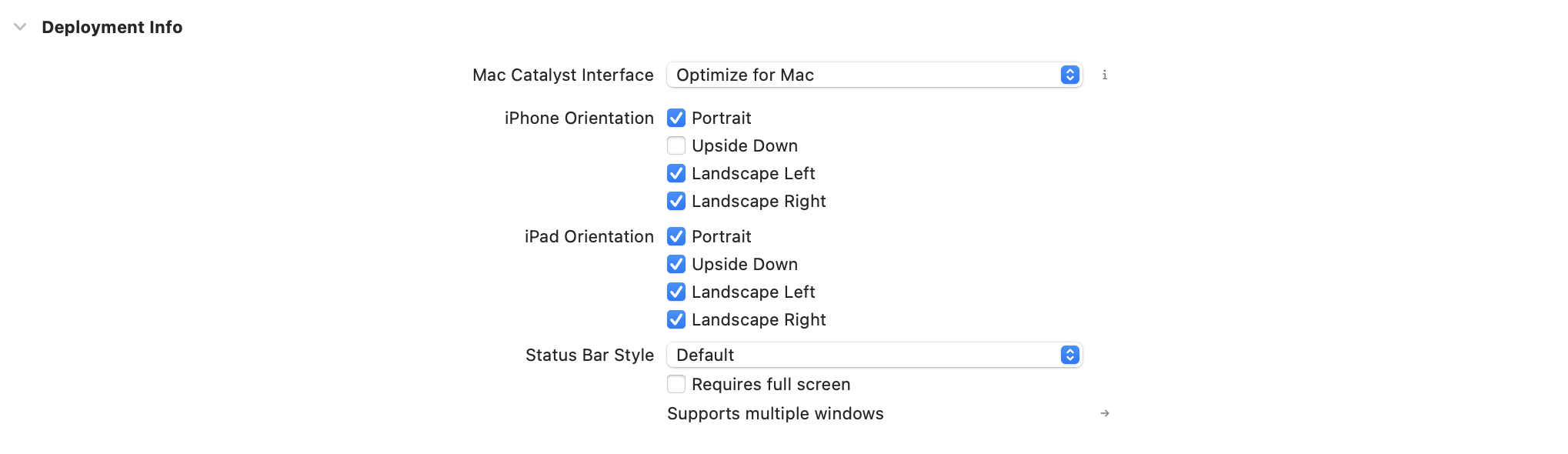
向きはメッセージの表示時にのみ適用されます。デバイスの向きが変更されると、メッセージビューはサポートされている向きのいずれかを採用します。小型デバイス(iPhone、iPod Touch)では、モーダルまたはフルアプリ内メッセージにランドスケープの向きを設定すると、コンテンツが切り詰められる場合があります。
表示タイミングをカスタマイズする
ユーザー体験の特定のタイミングで、利用可能なアプリ内メッセージを表示するかどうかを制御できます。フルスクリーンゲーム中やロード画面など、アプリ内メッセージを表示したくない状況がある場合、保留中のアプリ内メッセージを遅延させたり破棄したりできます。アプリ内メッセージのタイミングを制御するには、inAppMessage(_:displayChoiceForMessage:) デリゲートメソッドを使用して BrazeInAppMessageUI.DisplayChoice プロパティを設定します。
func inAppMessage(
_ ui: BrazeInAppMessageUI,
displayChoiceForMessage message: Braze.InAppMessage
) -> BrazeInAppMessageUI.DisplayChoice
- (enum BRZInAppMessageUIDisplayChoice)inAppMessage:(BrazeInAppMessageUI *)ui displayChoiceForMessage:(BRZInAppMessageRaw *)message
BrazeInAppMessageUI.DisplayChoice を設定して、以下のいずれかの値を返すようにします。
| 表示の選択 | 動作 |
|---|---|
.now |
メッセージは即座に表示されます。これがデフォルト値です。 |
.reenqueue |
メッセージは表示されず、スタックの先頭に戻されます。 |
.later |
メッセージは表示されず、スタックの先頭に戻されます。(非推奨。.reenqueue を使用してください) |
.discard |
メッセージは破棄され、表示されません。 |
ステータスバーを非表示にする
Full、FullImage、HTMLのアプリ内メッセージでは、SDKはデフォルトでステータスバーを非表示にします。その他のタイプのアプリ内メッセージでは、ステータスバーはそのまま維持されます。この動作を設定するには、inAppMessage(_:prepareWith:) デリゲートメソッドを使用して、PresentationContextのstatusBarHideBehaviorプロパティを設定します。このフィールドは以下のいずれかの値を取ります。
| ステータスバー非表示動作 | 説明 |
|---|---|
.auto |
メッセージビューがステータスバーの表示・非表示状態を決定します。 |
.hidden |
ステータスバーを常に非表示にします。 |
.visible |
ステータスバーを常に表示します。 |
ダークモードを無効にする
ユーザーのデバイスでダークモードが有効になっている場合に、アプリ内メッセージがダークモードのスタイルを適用しないようにするには、inAppMessage(_:prepareWith:) デリゲートメソッドを実装します。メソッドに渡される PresentationContext には、表示される InAppMessage オブジェクトへの参照が含まれています。各 InAppMessage には、dark と light モードのテーマを含む themes プロパティがあります。themes.dark プロパティを nil に設定すると、Brazeは自動的にライトテーマを使用してアプリ内メッセージを表示します。
ボタンを持つアプリ内メッセージタイプには、buttons プロパティに追加の themes オブジェクトがあります。ボタンにダークモードのスタイルが適用されないようにするには、map(_:) を使用して、light テーマのみを持ち dark テーマを持たないボタンの新しい配列を作成できます。
func inAppMessage(
_ ui: BrazeInAppMessageUI,
prepareWith context: inout BrazeInAppMessageUI.PresentationContext
) {
switch context.message {
case .slideup:
guard var slideup = context.message.slideup else { return }
slideup.themes.dark = nil
context.message.slideup = slideup
case .modal:
guard var modal = context.message.modal else { return }
modal.themes.dark = nil
modal.buttons = modal.buttons.map {
var newButton = $0
newButton.themes = .init(themes: ["light": $0.themes.light])
return newButton
}
context.message.modal = modal
case .modalImage:
guard var modalImage = context.message.modalImage else { return }
modalImage.themes.dark = nil
modalImage.buttons = modalImage.buttons.map {
var newButton = $0
newButton.themes = .init(themes: ["light": $0.themes.light])
return newButton
}
context.message.modalImage = modalImage
case .full:
guard var full = context.message.full else { return }
full.themes.dark = nil
full.buttons = full.buttons.map {
var newButton = $0
newButton.themes = .init(themes: ["light": $0.themes.light])
return newButton
}
context.message.full = full
case .fullImage:
guard var fullImage = context.message.fullImage else { return }
fullImage.themes.dark = nil
fullImage.buttons = fullImage.buttons.map {
var newButton = $0
newButton.themes = .init(themes: ["light": $0.themes.light])
return newButton
}
context.message.fullImage = fullImage
default:
break
}
}
- (void)inAppMessage:(BrazeInAppMessageUI *)ui
prepareWith:(BrazeInAppMessageUIPresentationContextRaw *)context {
switch (context.message.type) {
case BRZInAppMessageRawTypeSlideup: {
NSMutableDictionary *updatedThemes = [context.message.themes mutableCopy];
[updatedThemes removeObjectForKey:@"dark"];
context.message.themes = updatedThemes;
break;
}
case BRZInAppMessageRawTypeModal:
case BRZInAppMessageRawTypeFull:
{
NSMutableDictionary *updatedThemes = [context.message.themes mutableCopy];
[updatedThemes removeObjectForKey:@"dark"];
context.message.themes = updatedThemes;
NSMutableArray *updatedButtons = [NSMutableArray arrayWithCapacity:context.message.buttons.count];
for (BRZInAppMessageRawButton *button in context.message.buttons) {
BRZInAppMessageRawButtonTheme *lightTheme = BRZInAppMessageRawButtonTheme.defaultLight;
BRZInAppMessageRawButton *newButton = [button mutableCopy];
newButton.textColor = lightTheme.textColor;
newButton.backgroundColor = lightTheme.backgroundColor;
newButton.borderColor = lightTheme.borderColor;
[updatedButtons addObject:newButton];
}
context.message.buttons = updatedButtons;
break;
}
default:
break;
}
}
App Storeレビュープロンプトをカスタマイズする
キャンペーンでアプリ内メッセージを使用して、ユーザーにApp Storeレビューを依頼できます。
ステップ1:アプリ内メッセージデリゲートを設定する
まず、アプリでBrazeInAppMessageUIDelegateを設定します。
ステップ2:デフォルトのApp Storeレビューメッセージを無効にする
次に、inAppMessage(_:displayChoiceForMessage:) デリゲートメソッドを実装して、デフォルトのApp Storeレビューメッセージを無効にします。
func inAppMessage(_ ui: BrazeInAppMessageUI, displayChoiceForMessage message: Braze.InAppMessage) -> BrazeInAppMessageUI.DisplayChoice {
if message.extras["AppStore Review"] != nil,
let messageUrl = message.clickAction.url {
UIApplication.shared.open(messageUrl, options: [:], completionHandler: nil)
return .discard
} else {
return .now
}
}
- (enum BRZInAppMessageUIDisplayChoice)inAppMessage:(BrazeInAppMessageUI *)ui
displayChoiceForMessage:(BRZInAppMessageRaw *)message {
if (message.extras != nil && message.extras[@"AppStore Review"] != nil) {
[[UIApplication sharedApplication] openURL:message.url options:@{} completionHandler:nil];
return BRZInAppMessageUIDisplayChoiceDiscard;
} else {
return BRZInAppMessageUIDisplayChoiceNow;
}
}
ステップ3:ディープリンクを作成する
scene:openURLContexts:ハンドラーに、以下のコードを追加して{YOUR-APP-SCHEME}:app-store-reviewディープリンクを処理します。SKStoreReviewControllerを使用するにはStoreKitをインポートする必要があることに注意してください。
func scene(_ scene: UIScene, openURLContexts URLContexts: Set<UIOpenURLContext>) {
guard let url = URLContexts.first?.url else { return }
let urlString = url.absoluteString.removingPercentEncoding
if (urlString == "{YOUR-APP-SCHEME}:app-store-review") {
SKStoreReviewController.requestReview()
return;
}
// Other deep link handling code…
}
- (void)scene:(UIScene *)scene openURLContexts:(NSSet<UIOpenURLContext *> *)URLContexts {
NSURL *url = URLContexts.allObjects.firstObject.URL;
NSString *urlString = url.absoluteString.stringByRemovingPercentEncoding;
if ([urlString isEqualToString:@"{YOUR-APP-SCHEME}:app-store-review"]) {
[SKStoreReviewController requestReview];
return;
}
// Other deep link handling code…
}
ステップ4:カスタムのクリック時動作を設定する
次に、以下の内容でアプリ内メッセージングキャンペーンを作成します。
- キーと値のペア
"AppStore Review" : "true" - クリック時の動作を「アプリへのディープリンク」に設定し、ディープリンク
{YOUR-APP-SCHEME}:app-store-reviewを使用します。
Appleは各ユーザーに対してApp Storeレビュープロンプトを年間最大3回に制限しているため、キャンペーンはユーザーあたり年間3回にレート制限する必要があります。
ユーザーはApp Storeレビュープロンプトをオフにできます。そのため、カスタムレビュープロンプトでは、ネイティブのApp Storeレビュープロンプトが表示されることを約束したり、直接レビューを依頼したりしないでください。
前提条件
この機能を使う前に、React Native Braze SDKを統合する必要がある。
ロギングのメソッド
これらのメソッドを使用するには、BrazeInAppMessage インスタンスを渡して分析をログに記録し、アクションを実行します。
| メソッド | 説明 |
|---|---|
logInAppMessageClicked(inAppMessage) |
提供されたアプリ内メッセージデータのクリックを記録します。 |
logInAppMessageImpression(inAppMessage) |
提供されたアプリ内メッセージデータのインプレッションを記録します。 |
logInAppMessageButtonClicked(inAppMessage, buttonId) |
提供されたアプリ内メッセージデータとボタンIDのボタンクリックを記録します。 |
hideCurrentInAppMessage() |
現在表示されているアプリ内メッセージを閉じます。 |
performInAppMessageAction(inAppMessage) |
アプリ内メッセージのアクションを実行します。 |
performInAppMessageButtonAction(inAppMessage, buttonId) |
アプリ内メッセージボタンのアクションを実行します。 |
メッセージデータの処理
ほとんどの場合、Braze.addListener メソッドを使用して、アプリ内メッセージからのデータを処理するイベントリスナーを登録できます。
さらに、Braze.subscribeToInAppMessage メソッドを呼び出して、アプリ内メッセージがトリガーされたときにSDKに inAppMessageReceived イベントを発行させることで、JavaScriptレイヤーのアプリ内メッセージデータにアクセスできます。アプリ内メッセージがトリガーされてリスナーによって受信されたときに独自のコードを実行するには、このメソッドにコールバックを渡します。
メッセージデータの処理方法をカスタマイズするには、以下の実装例を参照してください。
デフォルトの動作を強化するため、またはネイティブのiOSやAndroidコードをカスタマイズするアクセス権がない場合は、デフォルトのUIを無効にしながら、Brazeからアプリ内メッセージイベントを受信することをお勧めします。デフォルトのUIを無効にするには、Braze.subscribeToInAppMessage メソッドに false を渡し、アプリ内メッセージデータを使用してJavaScriptで独自のメッセージを作成します。デフォルトのUIを無効にする場合は、メッセージの分析を手動でログに記録する必要があります。
import Braze from "@braze/react-native-sdk";
// Option 1: Listen for the event directly via `Braze.addListener`.
//
// You may use this method to accomplish the same thing if you don't
// wish to make any changes to the default Braze UI.
Braze.addListener(Braze.Events.IN_APP_MESSAGE_RECEIVED, (event) => {
console.log(event.inAppMessage);
});
// Option 2: Call `subscribeToInAppMessage`.
//
// Pass in `false` to disable the automatic display of in-app messages.
Braze.subscribeToInAppMessage(false, (event) => {
console.log(event.inAppMessage);
// Use `event.inAppMessage` to construct your own custom message UI.
});
組み込みUIを使用してアプリ内メッセージを表示するかどうかを決定するためのより高度なロジックを組み込むには、ネイティブレイヤーを介してアプリ内メッセージを実装します。

これは高度なカスタマイズオプションであるため、デフォルトのBraze実装をオーバーライドすると、アプリ内メッセージイベントをJavaScriptリスナーに送信するロジックも無効になることに注意してください。アプリ内メッセージデータへのアクセスの説明に従って Braze.subscribeToInAppMessage または Braze.addListener を引き続き使用する場合は、イベントの発行を自分で処理する必要があります。
カスタムマネージャーリスナーに関するAndroidの記事で説明されているように、IInAppMessageManagerListener を実装します。beforeInAppMessageDisplayed 実装では、inAppMessage データにアクセスしてJavaScriptレイヤーに送信し、戻り値に基づいてネイティブメッセージを表示するかどうかを決定できます。
これらの値の詳細については、Androidのドキュメントを参照してください。
// In-app messaging
@Override
public InAppMessageOperation beforeInAppMessageDisplayed(IInAppMessage inAppMessage) {
WritableMap parameters = new WritableNativeMap();
parameters.putString("inAppMessage", inAppMessage.forJsonPut().toString());
getReactNativeHost()
.getReactInstanceManager()
.getCurrentReactContext()
.getJSModule(DeviceEventManagerModule.RCTDeviceEventEmitter.class)
.emit("inAppMessageReceived", parameters);
// Note: return InAppMessageOperation.DISCARD if you would like
// to prevent the Braze SDK from displaying the message natively.
return InAppMessageOperation.DISPLAY_NOW;
}
デフォルトのUIデリゲートをオーバーライドする
デフォルトでは、braze インスタンスを初期化すると、BrazeInAppMessageUIが作成されて割り当てられます。BrazeInAppMessageUIはBrazeInAppMessagePresenterプロトコルの実装であり、受信したアプリ内メッセージの処理をカスタマイズするために使用できる delegate プロパティが付属しています。
-
こちらのiOSの記事で説明されているように、
BrazeInAppMessageUIDelegateデリゲートを実装します。 -
inAppMessage(_:displayChoiceForMessage:)デリゲートメソッドでは、inAppMessageデータにアクセスしてJavaScriptレイヤーに送信し、戻り値に基づいてネイティブメッセージを表示するかどうかを決定できます。
これらの値の詳細については、iOSのドキュメントを参照してください。
- (enum BRZInAppMessageUIDisplayChoice)inAppMessage:(BrazeInAppMessageUI *)ui
displayChoiceForMessage:(BRZInAppMessageRaw *)message {
// Convert the message to a JavaScript representation.
NSData *inAppMessageData = [message json];
NSString *inAppMessageString = [[NSString alloc] initWithData:inAppMessageData encoding:NSUTF8StringEncoding];
NSDictionary *arguments = @{
@"inAppMessage" : inAppMessageString
};
// Send to JavaScript.
[self sendEventWithName:@"inAppMessageReceived" body:arguments];
// Note: Return `BRZInAppMessageUIDisplayChoiceDiscard` if you would like
// to prevent the Braze SDK from displaying the message natively.
return BRZInAppMessageUIDisplayChoiceNow;
}
このデリゲートを使用するには、braze インスタンスを初期化した後に brazeInAppMessagePresenter.delegate に割り当てます。
BrazeUIはObjective-CまたはSwiftでのみインポートできます。Objective-C++を使用している場合は、これを別のファイルで処理する必要があります。
@import BrazeUI;
- (BOOL)application:(UIApplication *)application didFinishLaunchingWithOptions:(NSDictionary *)launchOptions {
BRZConfiguration *configuration = [[BRZConfiguration alloc] initWithApiKey:apiKey endpoint:endpoint];
Braze *braze = [BrazeReactBridge initBraze:configuration];
((BrazeInAppMessageUI *)braze.inAppMessagePresenter).delegate = [[CustomDelegate alloc] init];
AppDelegate.braze = braze;
}
デフォルトのネイティブUIをオーバーライドする
ネイティブiOSレイヤーでアプリ内メッセージの表示を完全にカスタマイズしたい場合は、BrazeInAppMessagePresenterプロトコルに準拠し、以下のサンプルに従ってカスタムプレゼンターを割り当てます。
BRZConfiguration *configuration = [[BRZConfiguration alloc] initWithApiKey:apiKey endpoint:endpoint];
Braze *braze = [BrazeReactBridge initBraze:configuration];
braze.inAppMessagePresenter = [[MyCustomPresenter alloc] init];
AppDelegate.braze = braze;
表示動作をカスタマイズする
アプリ内メッセージの表示動作は、以下の方法で実行時に変更できます。
// Sets in-app messages to display immediately when triggered.
Appboy.AppboyBinding.SetInAppMessageDisplayAction(BrazeUnityInAppMessageDisplayActionType.IAM_DISPLAY_NOW);
// Sets in-app messages to display at a later time and be saved in a stack.
Appboy.AppboyBinding.SetInAppMessageDisplayAction(BrazeUnityInAppMessageDisplayActionType.IAM_DISPLAY_LATER);
// Sets in-app messages to be discarded after being triggered.
Appboy.AppboyBinding.SetInAppMessageDisplayAction(BrazeUnityInAppMessageDisplayActionType.IAM_DISCARD);
カスタムリスナーを設定する
ユーザーがアプリ内メッセージとやり取りする方法をより細かく制御する必要がある場合は、BrazeInAppMessageListenerを使用してAppboy.AppboyBinding.inAppMessageListenerに割り当てます。使用しないデリゲートについては、単にnullのままにしておくことができます。
BrazeInAppMessageListener listener = new BrazeInAppMessageListener() {
BeforeInAppMessageDisplayed = BeforeInAppMessageDisplayed,
OnInAppMessageButtonClicked = OnInAppMessageButtonClicked,
OnInAppMessageClicked = OnInAppMessageClicked,
OnInAppMessageHTMLClicked = OnInAppMessageHTMLClicked,
OnInAppMessageDismissed = OnInAppMessageDismissed,
};
Appboy.AppboyBinding.inAppMessageListener = listener;
public void BeforeInAppMessageDisplayed(IInAppMessage inAppMessage) {
// Executed before an in-app message is displayed.
}
public void OnInAppMessageButtonClicked(IInAppMessage inAppMessage, InAppMessageButton inAppMessageButton) {
// Executed whenever an in-app message button is clicked.
}
public void OnInAppMessageClicked(IInAppMessage inAppMessage) {
// Executed whenever an in-app message is clicked.
}
public void OnInAppMessageHTMLClicked(IInAppMessage inAppMessage, Uri uri) {
// Executed whenever an HTML in-app message is clicked.
}
public void OnInAppMessageDismissed(IInAppMessage inAppMessage) {
// Executed whenever an in-app message is dismissed without a click.
}